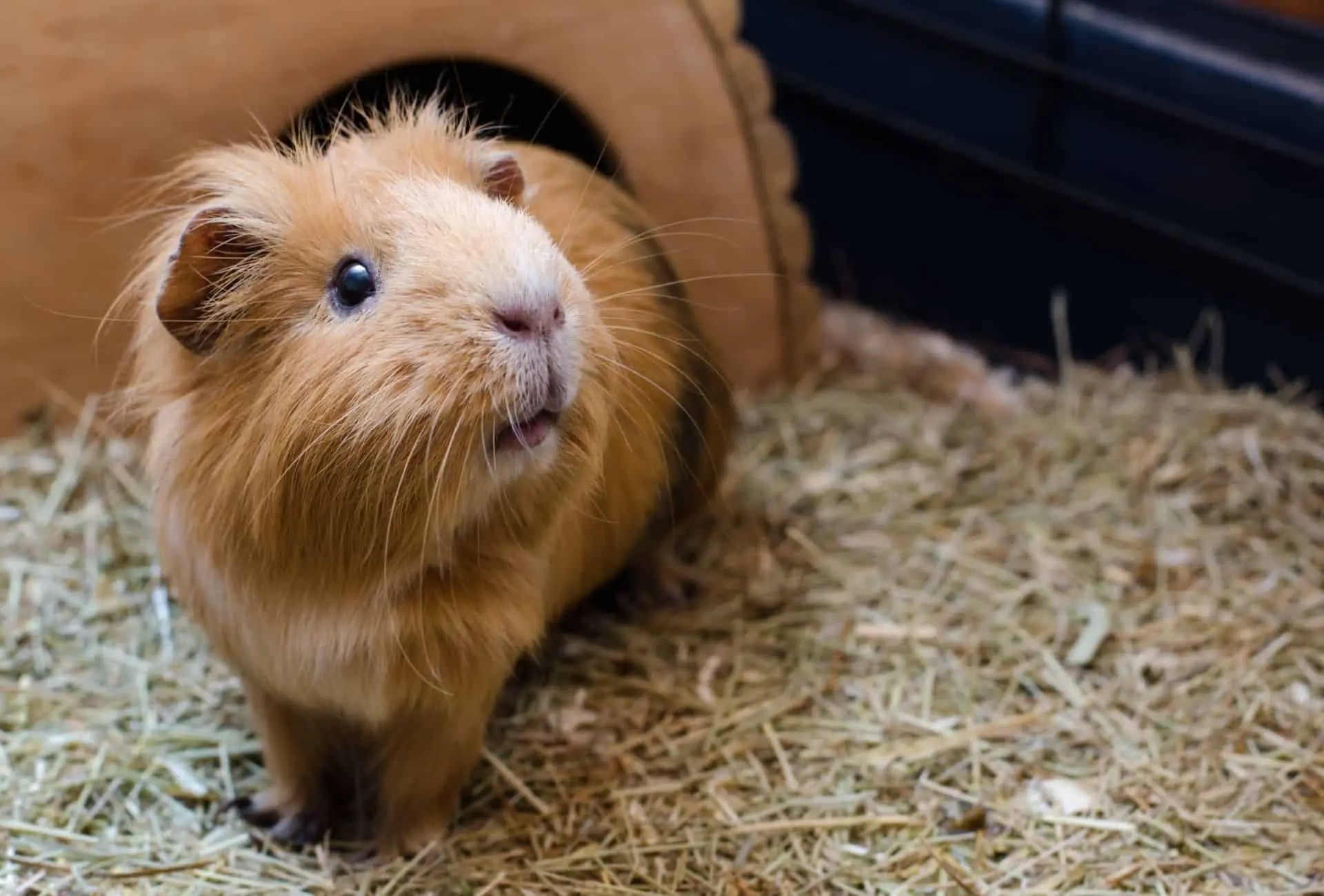
Being a guinea pig owner is super fun and rewarding.
If you are one of these people, then you should know that most guinea pigs will live the longest if they have a companion to spend time with.
These animals are social creatures and need same species interaction in order to stay happy and healthy.
But what happens when you get told that your chosen guinea pig doesn’t get along with others or one of your pair dies.
Guinea pigs usually have an average lifespan of 5-8 years. Keeping them alone can decrease their life expectancy and life quality.
In this guide, we’ll discuss how long guinea pigs can be left alone before it starts to take its toll on their mental health and physical well-being!
Is It OK to Have Just One Guinea Pig?
No, it is not recommended to have just one guinea pig in your home.
Guinea pigs need interactions with other guinea pigs in order to be happy and healthy and will suffer if they are left alone for long periods of time.
They have a natural tendency to live in small groups called “herds” and as highly social animals they need constant same-species interactions.
If you try to house one guinea pig by himself, that animal will likely get lonely very quickly because his social needs aren’t being met.
Now you may have visited your local pet store and the staff there told you that your chosen guinea pig doesn’t get along with others.
A guinea pig that doesn’t get along with anyone else is highly unlikely and the information you got is probably wrong.
If this guinea pig has shown aggressive behavior in the past, it might be due to lack of stimulation, too small cage or he just didn’t get along with the single guinea pig he was paired with.
Some pairings also work better than others, for example a neutered male with several females works better than two males.
Did you know that it is actually illegal to only buy one guinea pig in Switzerland?
Swiss law states the following: “Meerschweinchen sind soziallebende Tiere, die mindestens zu zweit gehalten werden müssen.”
As I am german, I can swiftly translate that too:
“Guinea pigs are social animals that must be kept at least in pairs.”
Art. 13; Anh. 2 Tab. 1 bes. Anforderung 47 TSchV

How to Keep a Single Guinea Pig Happy
If for any reason you are not able to get a second guinea pig, I would like to provide you with some helpful tips that will make your pet’s life as comfortable as possible.
Having only one guinea pig means that you will be his sole companion and “cage” mate.
Spending as much time as possible with your guinea pig will be crucial to your cavy’s well being.
And I am not only talking about spending time in proximity of the cage but also a lot of outside of the cage exploration time that will stimulate him and prevent boredom.
It would be great if you could provide your guinea pig with at least 2 hours of floor time everyday, divided into two sessions in the morning and evening.
Imagine staying alone in a cage all day everyday.
Boredom and stress would quickly creep up on you so providing your guinea pig with a variety of activities is mandatory.
The room that will be dedicated to your pet’s outside cage time should be completely guinea pig proof with no small objects that could be swallowed and no cables that can be chewed on.
Furthermore, pick a room for the cage that you spend the most time in.
Not only will you be able to interact with your piggy but he will also be able to hear your voice the whole day and you can easily pay attention to him.
Choose a cage that is big enough to house at least two guinea pigs for the possibility that you may have to add a second one in the future.
The more space your pet has the less stressed he will be in confinement during the day.
Space also enables you to place a lot of wooden structures, hides and toys inside.
Mental stimulation is incredibly important for a happy guinea pig and without a mate they can play with, they must rely on you and their surroundings.
There are a lot of fun toys out there but make sure you are only placing 2-3 inside their cage at a time and rotate the selection every few weeks to prevent your guinea pig from becoming bored.
Adding to your guinea pig’s floor time, you can also consider taking him outdoors if you have a fenced in garden.
You can also use an enclosed run or exercise pen that is big enough to provide your piggy with a ton of space to roam.
You could spend the time outside gardening, reading or just playing and interacting with your guinea pig which he will highly appreciate.
Never take your cavy outside on cold, wet or stormy days. The midday heat in the summer is also very dangerous for such a small animal.
Having a guinea pig that is used to being touched will make everything easier.
You can interact with him more closely and give him a bit of physical attention without causing any stress.
Guinea pigs can be very skittish so positive and slow desensitising is key for a healthy bond.
Do not attempt to handle or pick up your guinea pig if you have never done this before and rather get your pet familiar with your scent and voice first before you invade their personal space.
You can use positive reinforcement and treats, just like in dogs, to get your guinea pig to associate you with something very pleasant and positive.
Treats could be in the form of berries, lettuce, carrots or celery.
Find out what your guinea pig likes most and use that as a high value treat to strengthen your bond.
Guinea Pig Lonely Signs
One of the biggest fears many guinea pig owners have is whether it’s okay to leave their pet animals alone.
Often, people are afraid that this will cause unhappiness in a guinea pig and lead to behavioral issues or worse.
Guinea pigs are social animals, so when they start to feel isolated, you’ll see the negative effects.
One sign of loneliness is a guinea pig that no longer interacts with his owner or any other pets in the household.
That animal may also show signs of aggression if approached by another pet and even become more territorial about their cage space.
Guinea pigs are usually very vocal animals, but if you notice one becoming quieter and more withdrawn, that’s a major warning sign of loneliness.
This depression can get worse to the point that your guinea pig might no longer groom himself, eat or drink.
You may notice that your pet is sleeping a lot and spending most of his time in the hideouts.
Another sign of loneliness is nibbling and biting on the cage bars and sometimes they will even try to escape.
There are also physical signs like rapid head movements or teeth-baring when you approach the cage which are the results of too much stress.
As the owner, you will know your guinea pig best and if his behavior changes in any way, it might be time for a change.