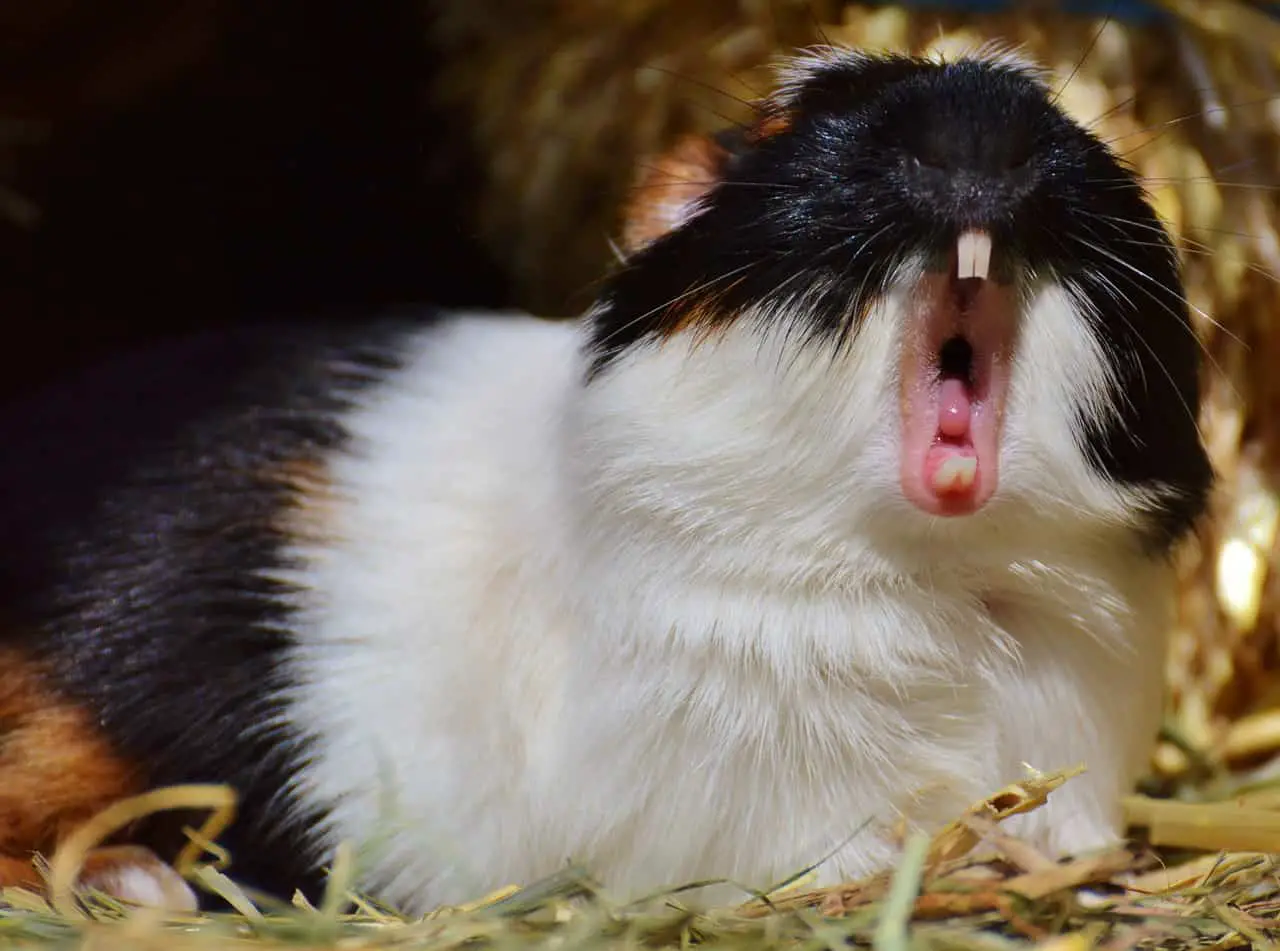
One might wonder whether guinea pigs have tongues like other mammals.
In fact, guinea pigs do possess tongues, which play vital roles in various functions such as grooming, swallowing food, and tasting their favorite treats. The tongue also has taste buds that help your cavy taste different foods.
Let us dive deeper into this topic!
Do Guinea Pigs Have Tongues?
Yes, guinea pigs have tongues that measure 5-8 millimeters in width and about 20 mm in length. They are covered in taste buds that help your cavies taste the food you provide them.
Although guinea pig tongues share common features with other animals, their unique structure provides insight into their feeding habits and preferences.
Understanding the anatomy and function of guinea pig tongues can further aid owners in providing appropriate care and nutrition for their beloved pets.
Anatomy of a Guinea Pig’s Mouth
Tongue Structure
The tongue of a guinea pig is an important organ in the oral cavity that plays a vital role in various functions like eating, grooming, and tasting.
The structure of a guinea pig’s tongue is similar to that of other mammals, having a muscular and moist texture. It is covered with tiny papillae, which serve various functions such as helping with the manipulation of food and grooming.
Taste Buds
Taste buds are small sensory structures located on the surface of the guinea pig’s tongue. These specialized receptors detect different tastes like sweet, sour, bitter, and salty.
Guinea pigs rely on their taste buds to explore new food sources and identify what is safe to eat. This ability to taste is essential for a guinea pig’s survival, as it helps them avoid consuming harmful substances.
Salivary Glands
The salivary glands in guinea pigs are responsible for producing saliva, which is crucial in the digestive process. There are three main types of salivary glands located in their mouth: the parotid, submandibular, and sublingual glands.
These glands secrete saliva into the oral cavity, helping to moisten food and making it easier for the guinea pig to swallow.
Saliva also plays a key role in digestion by breaking down complex carbohydrates and providing immunity to the oral cavity through antimicrobial properties.
Guinea Pig Tongue Functions
Guinea pigs’ tongues serve various functions, including eating, grooming, and even verbal communication. In this section, we’ll explore some of the key functions of a guinea pig’s tongue.
Eating and Chewing
A guinea pig’s tongue is essential for its ability to eat and chew food. The tongue helps to move food around in the mouth, allowing the guinea pig to position it between their molars for grinding.
This grinding action is important since guinea pigs, like other rodents, have a diet that typically consists of fibrous plant materials such as hay and grasses. The guinea pig’s tongue also plays a role in forming food boluses, which are then swallowed and passed down the esophagus for digestion.
Grooming and Cleaning
Another important function of a guinea pig’s tongue is grooming and cleaning. Guinea pigs maintain their fur and remove debris from their teeth by using their tongues to lick and groom themselves.
This not only keeps their fur clean and healthy but also helps to distribute natural oils across their body that maintain fur health and act as a protective barrier. In addition to grooming their own fur, guinea pigs may also groom other guinea pigs in their social group, helping to promote social bonding and care for their peers.
Common Guinea Pig Tongue Issues
Guinea pigs indeed have tongues, and just like any other pets, they can experience issues related to their tongues. In this section, we will discuss two common guinea pig tongue problems: oral injuries and dental issues.
Oral Injuries
Guinea pigs can accidentally injure their tongues while eating, playing, or grooming. Biting the tongue, getting it caught on toys or cage bars, and experiencing external trauma are common causes of oral injuries. Signs that your guinea pig might have an oral injury include:
- Drooling
- Refusal to eat or drink
- Pawing at the mouth
- Swelling or bleeding from the mouth
- Lethargy
If you suspect your guinea pig has a tongue injury, it’s essential to consult a veterinarian who specializes in small animals as soon as possible. They can assess the injury, provide pain management, and recommend appropriate treatments.
Dental Problems
Guinea pigs’ teeth grow continuously throughout their lives, which means they need to chew on hay and fibrous foods to maintain proper dental health. Dental problems in guinea pigs can cause tongue issues such as inflammation, ulceration, or infections.
Some common dental issues in guinea pigs include:
Overgrown teeth
When the guinea pig’s teeth grow too long, they can cause pain and inflammation in the tongue, making it hard for them to eat.
Malocclusion
Misaligned teeth can lead to uneven wear, potentially causing injury to the tongue or leading to infections.