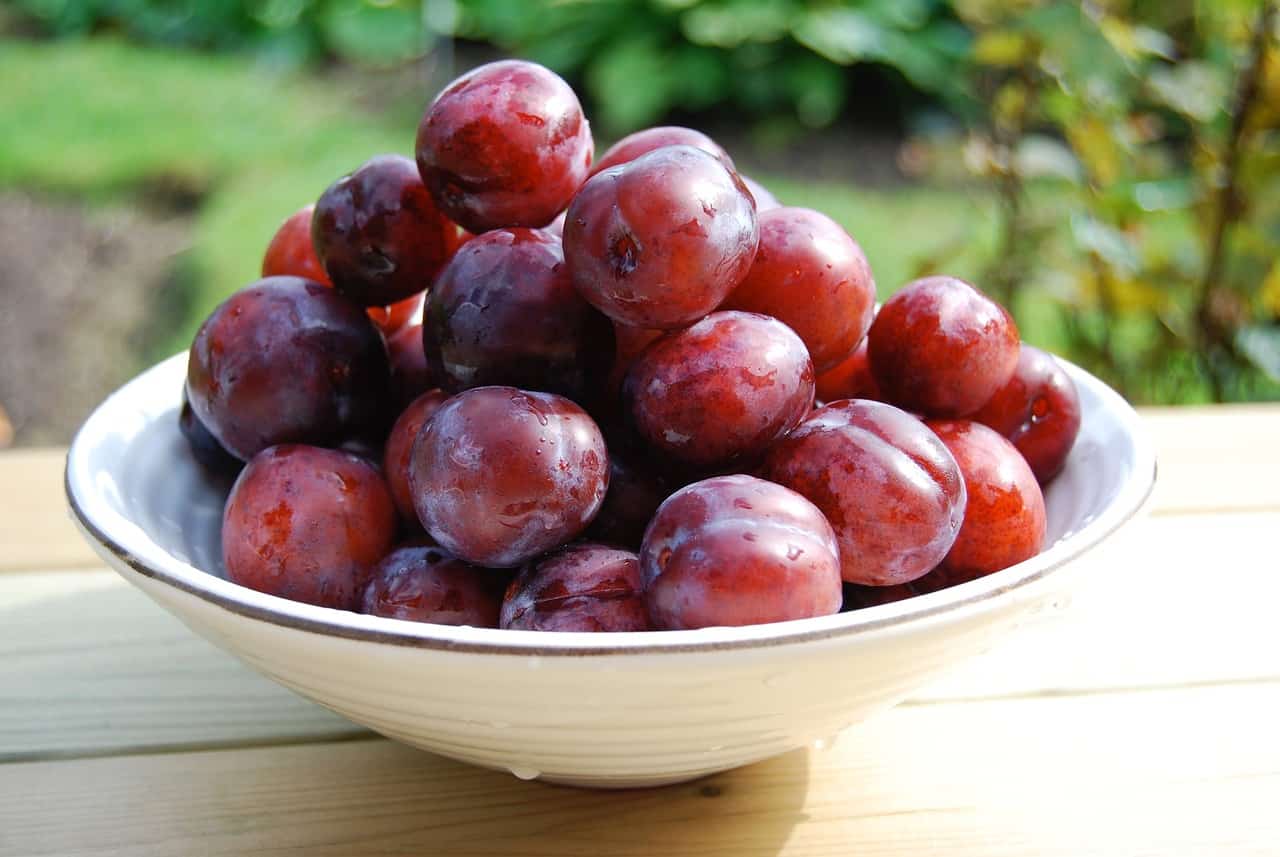
One common question that arises in a guinea pig owner’s mind is whether guinea pigs can eat plums.
The quick answer is yes, guinea pigs can safely enjoy plums as an occasional treat.
Plums provide essential vitamins and minerals that can boost your pet’s overall well-being, but it’s important not to overdo it. After all; plums are high in sugar, and can lead to weight gain and other health problems in cavies if consumed in excess.
In this guide, we tell you exactly how to feed plums and the quantity of plums that is safe for your guinea pigs.
Can Guinea Pigs Eat Plums?

Yes, guinea pigs can eat plums, but moderation is key when incorporating them into your pet’s diet. Plums contain some nutritional benefits, but they can also pose certain health concerns. Let us discuss the pros and cons of feeding plums to guinea pigs.
The Nutritional Benefits of Plums for Guinea Pigs
Plums are a good source of vitamins and minerals that can benefit your guinea pig’s health. They contain:
Vitamin C
Guinea pigs, like humans, cannot produce their own vitamin C, so including it in their diet is crucial. Vitamin C helps support their immune system and prevents scurvy.
Fiber
Plums contain a moderate amount of fiber, which helps maintain your guinea pig’s digestive health.
Antioxidants
Plums are rich in antioxidants, promoting overall health and well-being for your little pet. Antioxidants can help boost your guinea pig’s immune system and could also reduce the risk of certain cancers.
Possible Health Concerns of Feeding Excess Plums to Guinea Pigs
Though plums can provide benefits, they should only be given as a treat due to several potential health concerns:
Sugar Content
Plums have a high sugar content, which can be harmful to guinea pigs if consumed excessively. Overconsumption of sugar can lead to obesity and dental problems.
Pits and Stones – Choking Hazard
Be careful when feeding your guinea pig plums, as the pits can be a choking hazard. Always remove the pit and cut the plum into small pieces before offering it to your pet.
Pesticides
Thoroughly wash the plums before feeding them to your guinea pig, as pesticide residue on the fruit’s surface could be harmful. Alternatively, choose organic plums if possible.
Preparing Plums for Your Guinea Pig
Remember to introduce plums gradually into your guinea pig’s diet and keep an eye out for any adverse reactions. If you notice any digestive issues or changes in your pet’s behavior after eating plums, consult your veterinarian for advice.
This section will cover how to wash the plums, the appropriate portion sizes, and the frequency with which you should offer plums to your guinea pig.
Washing the Plums
Before feeding plums to your guinea pig, make sure to thoroughly wash them. This is essential in removing any dirt, pesticides, or other contaminants that may be harmful to your guinea pig.
Simply rinse the plums under cold water and lightly scrub the surface to provide a safe and clean treat for your pet.
Portion Sizes
Guinea pigs are small animals, so it is important to give them an appropriate portion of plum. Offering a slice or two of plum is recommended.
Be sure to remove the pits, as they can be a choking hazard and contain harmful toxins. To make it easier for your guinea pig to eat, cut the slices into smaller pieces.
As stated above, plums are high in sugar, so they should be considered a treat rather than a regular part of your guinea pig’s diet.
Frequency
As with any treat, moderation is key when feeding plums to your guinea pig. Plums should only be given once or twice a week to ensure your pet maintains a balanced diet.
Incorporating a variety of fresh vegetables and fruits, such as bell peppers, tomatoes, and cucumbers, along with their daily serving of hay and pellets, will help keep your guinea pig healthy and satisfied.
Also Read: Can Guinea Pigs Eat Apricots
Alternatives to Plums

Guinea pigs enjoy a variety of fruits and vegetables besides plums. Providing a diverse and balanced diet is essential for your guinea pig’s overall health.
In this section, we will explore a range of alternatives to plums in terms of fruits and vegetables, suitable for guinea pi